HOW TO PLAY A KEYBOARD - A Simple Study Guide (only 33 points to consider for starters)
Sihle Zungu
1. Start playing and be prepared for frustration.
2. Understand that music, in general, consists of 12 keys.
3. The primary key names range from A to G.
4. The keyboard's layout allows you to easily visualize all the keys.
5. Moving from A, the next key is A sharp, and before A is A flat. Sharps and flats are the black keys on the keyboard. This applies to all key names, from A to G, for example, G sharp(#) and G flat(b).
6. Your hands' shape matters when playing the keyboard. Follow the rule of shaping your hands as if holding a cup facing downward, as learned from a piano book.
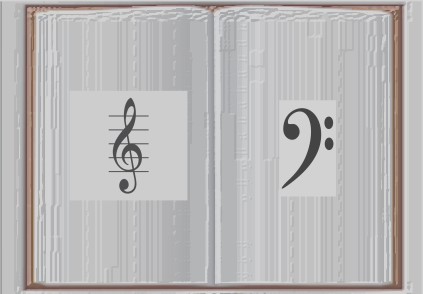
7. Start by playing scales for each of the 12 keys on the keyboard. Begin with the C major scale, composed entirely of white keys. Familiarize yourself with the piano chart, which divides the instrument into bass (left hand) and treble (right hand) areas.
8. The keyboard always includes Middle C, which is the key in the middle of the instrument. This key falls between the treble and bass staves on a musical chart.
9. Begin playing the major scale of the key of C, using only the white notes. If you know tonic-solfa notation, the first note for the key of C is "doh," and the last note, B, is "ti," while higher C is a higher "doh."
10. Pay attention to fingering when playing scales. Research proper finger placement for both hands.
11. Practice the C scale separately with your right and left hands before attempting both hands together.
12. Understand chords, which are groups of notes played together to produce harmony. Explore melody, a series of notes played sequentially to create a tune.
13. Use a chord dictionary to grasp chord structures. A major chord consists of 1, 3, and 5, such as CEG for a C major chord. Learn about major, minor, and other chord types.
14. Explore different chord types, including major, minor, diminished, and seventh chords. Similarly, learn about various scale types like major, minor, pentatonic, and blues scales.
15. Try playing a song using chords in your right hand and a bass note in your left hand.
16. Practice playing a song's melody in your right hand and the bass in your left hand.
17. Play chords with your left hand and the melody with your right hand. Start in the key of C before trying other keys.
18. Remember that songs are played in specific keys, such as C or A. Learn about accidental notes and key changes.
19. Engage in continuous practice while ensuring it remains meaningful and interesting. Strive to learn something new during each practice session.
20. Learn a variety of songs, including challenging ones.
21. Familiarize yourself with song progressions and the 2-5-1 progression.
22. Consider learning the 12-bar blues and songs with seventh chords for a deeper understanding of music.
23. Study key signatures, treble, and bass clefs.
24. Understand time signatures, tempo, and rhythm.
25. Learn about notes, note divisions, and rests.
26. Embrace your musical journey and enjoy each step, without comparing yourself to others.
27. Practice playing slowly and accurately to improve accuracy at higher speeds.
28. Explore jazz music as it can enhance your overall musical skills and understanding.
29. This guide aims to provide you with essential information and make your learning journey smoother, based on personal experiences.
30. In the future, you'll explore modes, atonal music, different styles, and traditions in music.
31. Delve into the history of musicians to gain valuable insights into music.
32. Consider purchasing your own instrument.
33. End of the guide. Enjoy your musical journey!
Apple Playlist Spotify Playlist